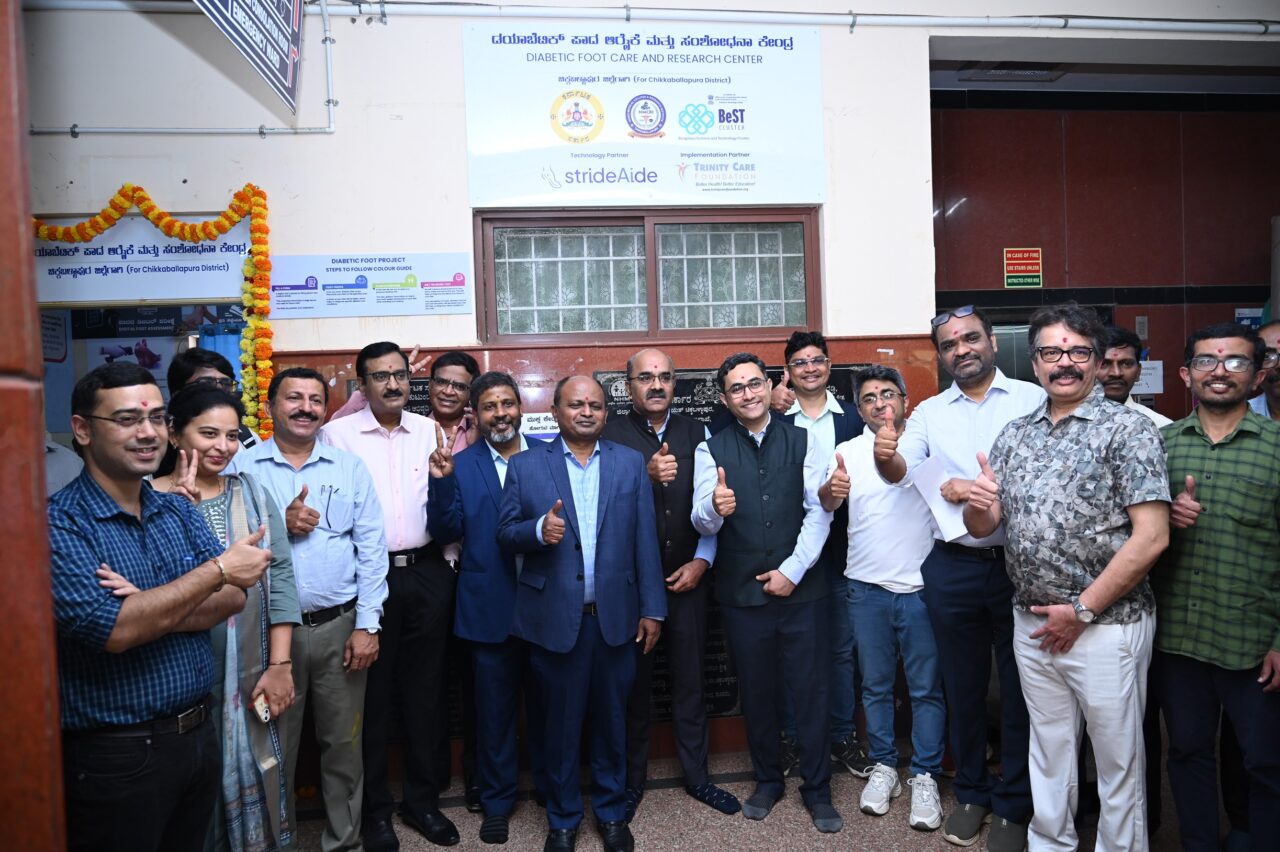
On World Diabetes Day, 14 November 2025, the Government District Hospital in Chikkaballapura witnessed more than the inauguration of a new facility. It marked the beginning of a sustainable public health intervention shaped through collaboration between science, government and a social impact organisation.
The Diabetic Foot Care and Research Centre, established by Trinity Care Foundation in partnership with BeST – Bengaluru Science and Technology Cluster and Nandi Medical College and Research Institute (NMCRI), is a clear example of how Corporate Social Responsibility in India is evolving. It reflects a shift from short-term outreach activities to long-term investments that strengthen government systems, align with national priorities and continue to serve communities long after the formal project period ends.
Diabetic peripheral neuropathy often progresses silently. Without early care, it can lead to severe mobility loss and, in many cases, foot amputation. Recognizing this urgent need, the new centre introduces an innovative, contactless digital podiatry kiosk equipped with scanning, pressure mapping and AI-driven analysis. It offers instant foot health assessments and personalized risk reports, bridging the gap between early detection and timely care. For a public hospital, such technology strengthens its capacity to reach patients who may otherwise remain undiagnosed until complications escalate.
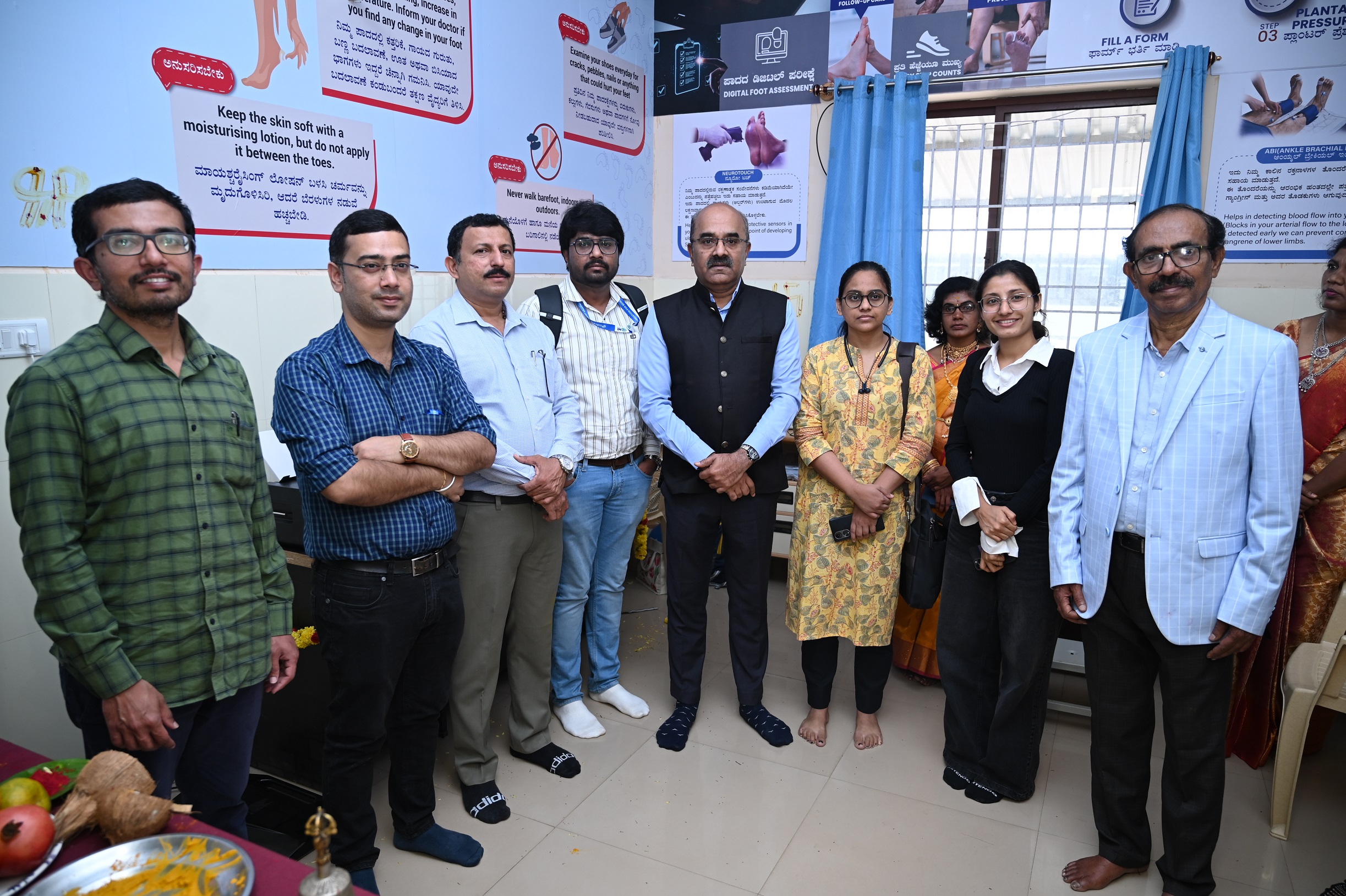
This is the kind of intervention that sustainable CSR aims to support. Rather than creating parallel systems, CSR investments work alongside government institutions, upgrading their infrastructure, expanding their capability and improving accessibility. Trinity Care Foundation’s long-standing partnerships with state institutions reflect this approach. Through an MOU with IISc Bengaluru and close coordination with the Government of Karnataka, the Foundation has been working to bring digital podiatry solutions into public health settings where diabetic foot complications are often underdiagnosed.
Events such as the inauguration brought together medical students, nursing trainees, health workers and community members. They were sensitized not only to the technology but to the broader need for awareness around diabetic foot health. Capacity building, an essential pillar of sustainable CSR, was evident as teams across NMCRI and frontline staff learned how to integrate digital screening into existing workflows. When government personnel gain new skills and tools, improvements continue long after the initial launch.
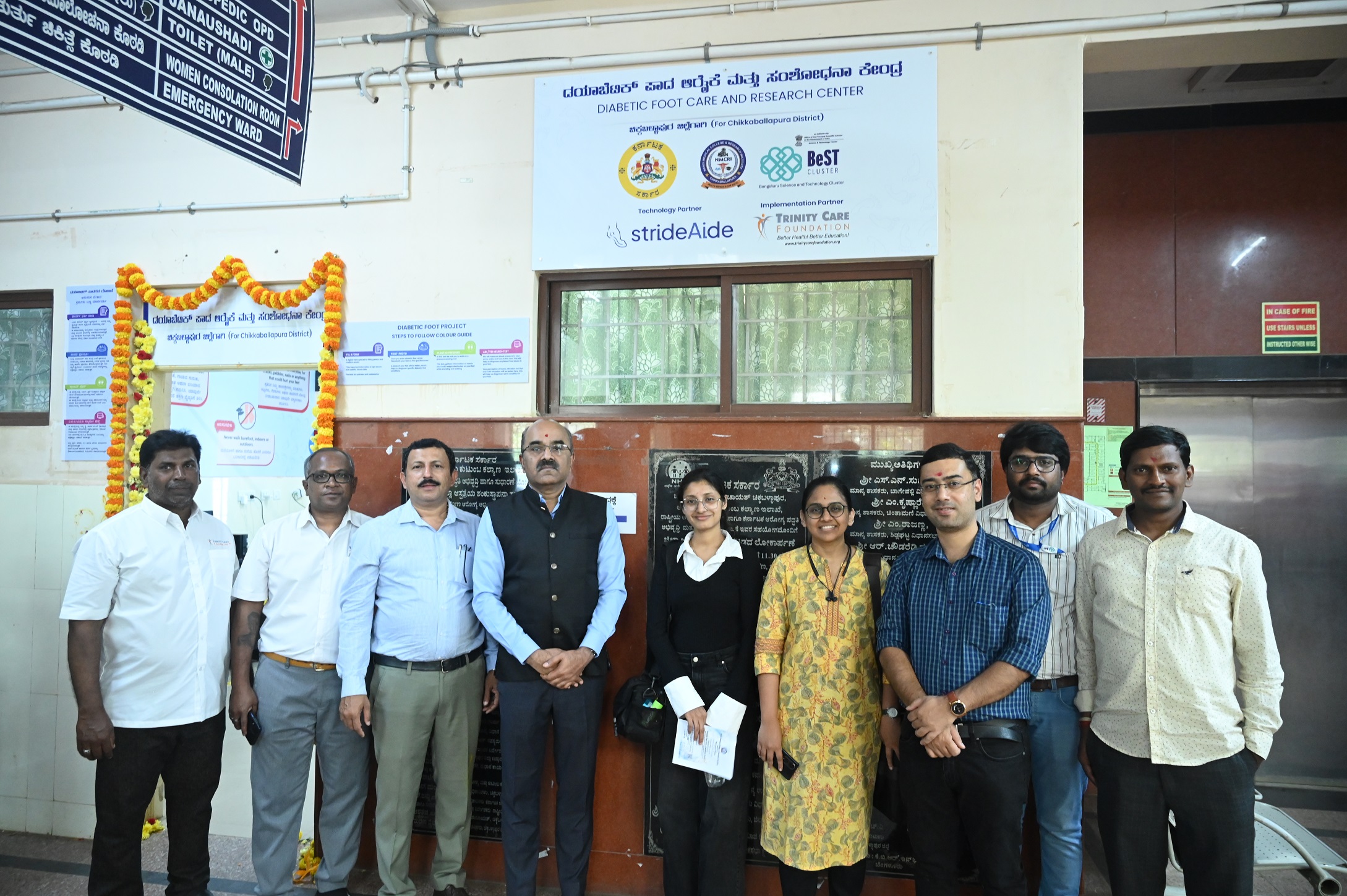
The centre was formally inaugurated by leaders from NMCRI, BeST, StrideAide and Trinity Care Foundation, supported by teams working across research, administration and clinical practice. Their involvement underscores another principle of sustainable CSR: shared ownership. When monitoring, reporting and accountability are jointly managed, trust between institutions strengthens and interventions become embedded into the public system rather than remaining isolated pilot projects.
Technology-led CSR initiatives like this one are reshaping how public health challenges are addressed. Digital screening tools in primary care centres, AI-driven diagnostic platforms and data-informed workflows enable government hospitals to serve more people with greater accuracy and reduced delays. When these tools are designed for scale and introduced within an established government framework, they can reach communities across districts, not just small pockets.
Sustainable CSR is ultimately measured by the legacy it builds. In Chikkaballapura, that legacy begins with a centre that helps prevent avoidable amputations, empowers people to understand their health and enhances the capability of the public health system. As India continues to strengthen partnerships between corporates, research bodies and government institutions, models like this demonstrate how meaningful collaboration can advance long-term social progress.
This initiative stands as a reminder that genuine impact is created when technology, public systems and community needs come together. On this World Diabetes Day, Karnataka took a step in that direction — one that has the potential to protect many more steps in the years ahead.
If your organisation is looking to make a lasting impact through sustainable CSR initiatives, we would be glad to collaborate. Reach out to us at support@trinitycarefoundation.org to explore partnership opportunities or request more details.
Leave a Reply